The Setup
Your partner brings it up casually. Or carefully. Maybe they've been thinking about it for months. Either way, suddenly there's a conversation about introducing toys into your sex life. And you're feeling about seventeen different things at once: curious, worried, excited, self-conscious, maybe a little defensive.
Here's what I want you to know first. Your hesitation is not a problem to solve. It's information. And the fact that your partner is enthusiastic is not pressure. It's an opening. The trick is treating both as true at the same time.
The Gap Between Enthusiasm and Readiness
There's a thing that happens in relationships when one person is excited about something and the other person isn't sure yet. The enthusiastic person can accidentally become the spokesperson for the idea, which means the unsure person starts defending themselves instead of exploring.
Reframe this. You're not opposing your partner. You're moving at different speeds, and that's completely normal. One of you saw the possibility first. That doesn't mean the other one needs to catch up immediately.
Talk about this gap openly. Ask your partner what's driving their interest. Not "why do you want to use toys?" but specifically "what made you think about this right now?" Is it something they've wanted forever? A curiosity sparked by something they read? A way they want to deepen intimacy? The answer matters because it changes how you approach the next conversation.
What "Giving This a Try" Actually Means
Here's the thing about agreeing to try something new with a partner. It doesn't mean you're signing up to love it. It doesn't mean you're weird if it doesn't work. It means you're willing to be curious together for an evening, and then talk about what happened.
Set that expectation explicitly. Tell your partner: "I'm open to this, but I want us to check in afterward. If it doesn't feel right, that's okay. We're experimenting, not committing." This takes the pressure off performance and puts it on communication.
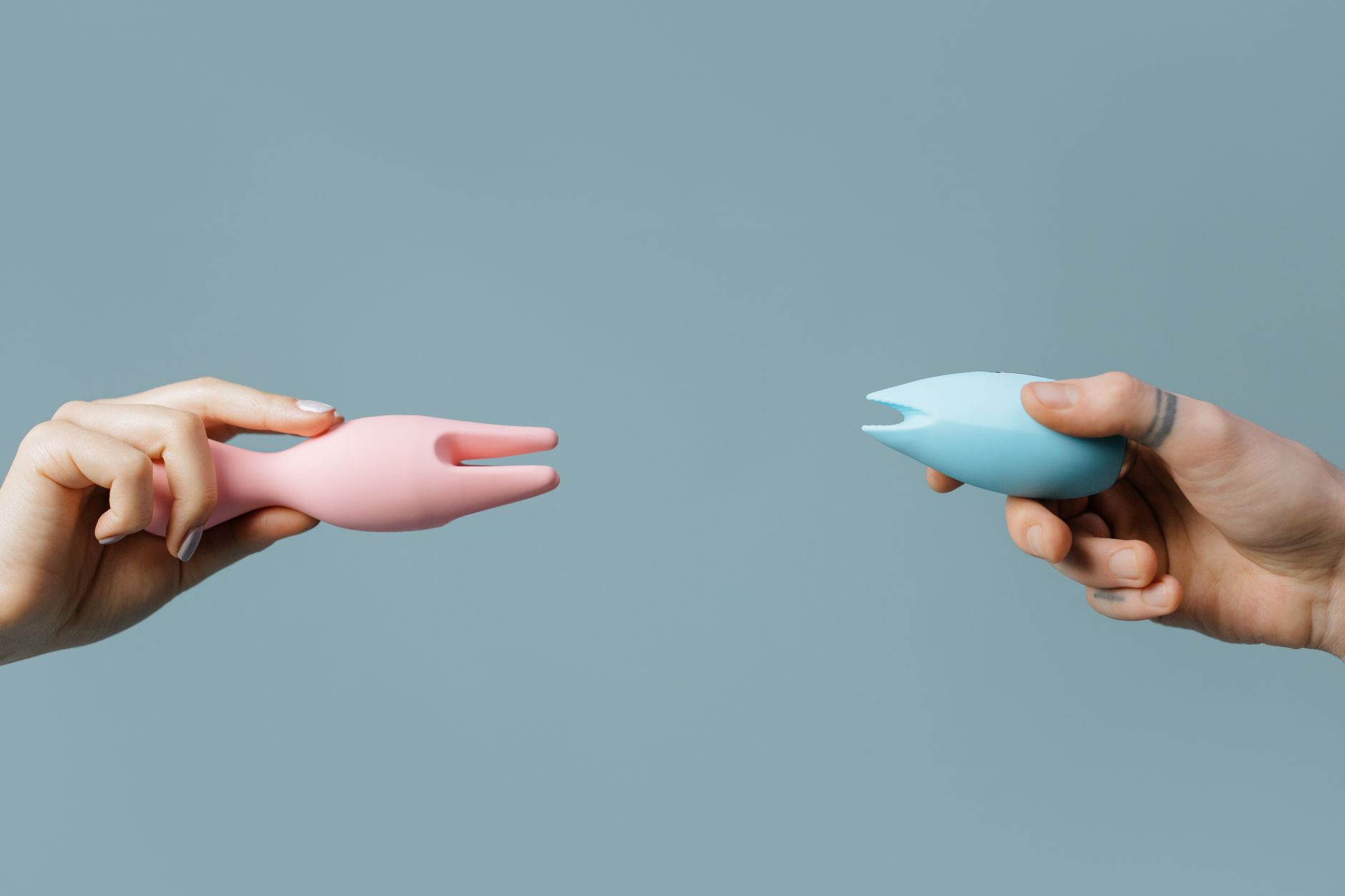
On a practical level, "trying it" means having the toy present and accessible, but not making its use the goal of the night. If you're tense about whether you're going to use it, you won't be present for pleasure. The best first experience with a lemon vibrator or any clitoral vibrator happens when you're already aroused, relaxed, and genuinely curious.
The Conversation You Need to Have First
Not the logistics conversation. Not "which toy should we get." The conversation about what's making you nervous.
Be specific. Are you worried about:
Looking awkward or silly? Most people feel weird at first. That's normal. It usually passes within 30 seconds once you're actually in the moment.
That the toy will be better than you are? This is a real fear and worth naming. Here's the truth. A lemon vibrator doesn't do anything you can't do. It's a tool that creates specific sensation. It's not a replacement. If your partner is attracted to you and enjoys your sex life, a toy doesn't change that.
That your partner is dissatisfied with you? Sometimes the subtext beneath toy hesitation is "does this mean they want someone else?" or "isn't sex with me enough?" Those are relationship questions, not sex questions. They deserve their own conversation, separate from toys.
That you'll feel pressured? This one's crucial. Tell your partner what you need to feel safe trying something new. Do you need them to be patient? To check in during? To not make a big deal if you change your mind halfway through? Say it.
How to Actually Introduce the Toy
First time is not the moment to be spontaneous. Plan it. You'll feel better. Your partner will be less likely to fumble with it awkwardly.
Start solo if that helps. If you've never held a lemon vibrator before, play with it by yourself first. Understand how it feels, what the settings do, how it sounds. This is true even if your partner bought it. Demystifying it removes some of the weirdness.
When you use it together, let your partner watch you use it on yourself first. This does several things. It gives them a chance to see that you're comfortable enough to explore it. It lets you warm up without performance pressure. It builds anticipation. And it shows your partner what you actually like, which is information they can use.
If you're nervous about it being visible, start clothed. Use it over underwear or through a sheet. Some people find the barrier helpful emotionally at first, and it absolutely still works.
Here's what I tell couples constantly. The first time using something new together doesn't have to be hot. It has to be gentle, curious, and honest. Hotness comes later. You're gathering information about what you like and what you don't.
The Patterns That Show Up and What They Mean
You might notice that once you get past the initial weirdness, pleasure arrives differently than you expected. A lemon clitoral vibrator works through suction and pattern, which is gentler than traditional vibration. Many people find this feels less intense, more controlled, and easier to sustain.
You might also notice that your partner starts paying more attention to the rest of your body, rather than trying to replicate what the toy does. This is actually a good sign. It means they're understanding the toy as an addition, not a replacement.
If you feel uncomfortable during it, say so. Not after. During. "That feels too strong right now" or "can we try a different pattern" or "actually, I want to stop." Your partner needs to hear this, and hearing it is actually good for them. It means they're getting real-time feedback about what works.
You might also realize halfway through that you don't want to continue. That's not failure. That's your nervous system telling you something. Honor it.
What to Do if You Hate It
Let's be clear. Not everyone loves toys. Not everyone wants them in their sex life. And that's completely fine.
If you hate it, tell your partner. Not "I hate this," but "this isn't for me." There's a difference. One is about the experience, the other is about you as a person.
Then talk about what didn't work. Was it the sensation? The context? The pressure you felt to like it? The solution depends on what the problem actually was.
Some people don't want toys because they feel like they're performing rather than connecting. If that's you, the solution might not be a better toy. It might be how to use lemon vibrators when you feel pressure to perform during sex, which is about the mindset, not the tool.
Other people try toys and realize they prefer the simplicity of hands and bodies. That's valid. You don't need to keep trying if it's genuinely not your thing.
But here's the distinction. If you're rejecting it because you're scared, that's different from rejecting it because you've tried it and it's not for you.
What to Do if You Actually Like It
People are often surprised by this. They expect to hate it and instead find it opens up something new. You might discover that this toy makes orgasm easier, or different, or more intense. You might find that you like having your partner watch. You might realize that some of your previous difficulty with pleasure when sensation feels different after 40 has a solution.
If that happens, let yourself enjoy it. Don't sabotage it by feeling weird about liking it. Your partner is happy. You're having better sex. These are not problems.
The next conversation is about how to incorporate this into your regular sex life. Do you use it every time? Sometimes? Only when you initiate? Does your partner use it on you, or do you prefer to use it on yourself? These are practical questions that deserve planning.
The Bigger Picture
This one experience doesn't define your sex life. But it does say something about your relationship. You're both willing to be uncomfortable for the possibility of connection. You're talking about sex instead of avoiding it. You're moving at different paces and handling it with respect.
Those things matter more than whether you fall in love with a lemon vibrator.
If you want more support navigating this conversation with your partner, reach out to us. And if you're ready to explore but want to do it at your own pace, we're here to help.
People Also Ask
What if my partner is disappointed that I don't want to use toys?
That's their work, not yours. You can be sympathetic to their disappointment and still hold your boundary. "I understand you were excited about this. I'm not ruling it out forever, but right now it doesn't feel right for me." If they push past your "no," that's a relationship problem, not a toy problem. Consider whether you feel respected in general.
Can I use a lemon clitoral vibrator by myself first if my partner bought it?
Absolutely. Explore it alone. Get comfortable with it. Then you can approach using it together from a place of actual knowledge instead of nervousness. This actually makes the shared experience better because you know what you like.
How do I know if I'm hesitant because I'm genuinely not interested or because I'm scared?
Genuine disinterest feels like "this isn't for me" even when you imagine it. Fear feels like "what if this is too weird" or "what if I don't like it." Fear can change. Genuine disinterest usually doesn't. Try it once from a place of curiosity, then decide.
What if using a toy makes me feel less attracted to my partner?
It shouldn't, and if it does, something else is probably happening. Either the toy is triggering insecurity about your relationship, or you're using it to avoid intimacy rather than enhance it. That's worth exploring separately from the toy itself.
Is it normal to feel awkward the first time?
Completely normal. Almost everyone feels awkward the first time. The awkwardness usually fades within a few minutes once you're focused on sensation instead of self-consciousness. If it doesn't fade, that's useful information.
Can my partner hurt me with a lemon vibrator?
A lemon sucker creates gentle suction, which is actually less likely to cause pain than intense vibration. Start at lower settings, use lubrication, and communicate about pressure. If something hurts, stop. Your body will tell you what it needs.