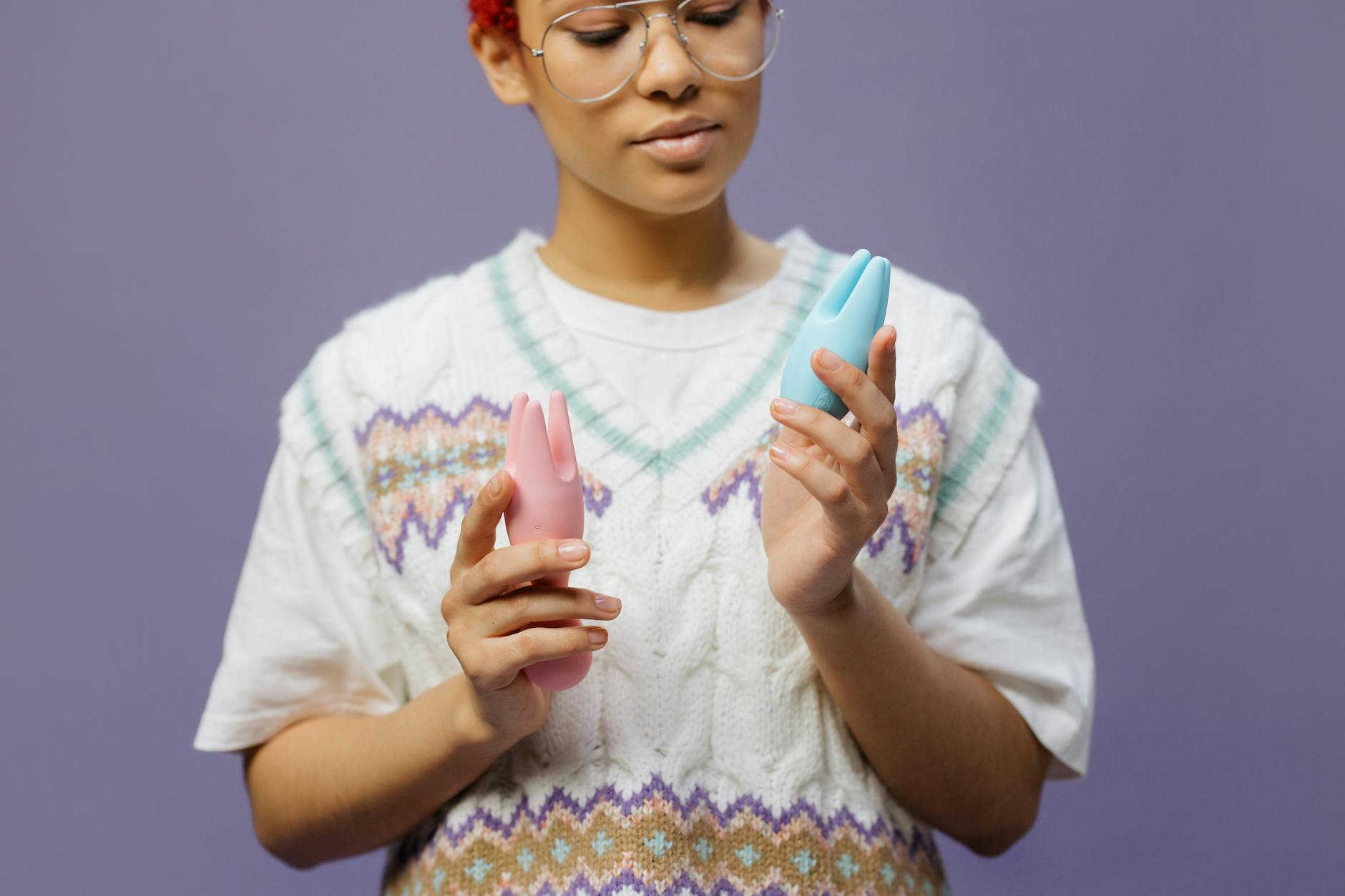
How to Use Lemon Vibrators With Your Hands for Better Control
The difference between holding a lemon clitoral vibrator still and actually directing it matters wildly. Here's what hand positioning, pressure, and movement do for pleasure.
People treat lemon vibrators like remote controls. Press it, hold it steady, wait for the magic. But the magic isn't in the device. It's in what your hands do with it. The difference between a mediocre experience and an incredible one comes down to grip, angle, pressure, and rhythm. Your hands are the actual tool. The vibrator is just the amplifier.
Here's the thing: your clitoris doesn't want the same pressure or angle for the entire session. Some parts of the clitoral structure respond best to direct contact. Others prefer indirect stimulation through the surrounding tissue. A lemon clitoral vibrator can hit all of those zones, but only if you're actively directing it. Letting it sit in one spot, even on the perfect pattern, means you're missing 70 percent of what it can do.
Hand control also lets you respond to your own feedback in real time. When you feel a shift in sensation, you can adjust immediately. You can slow down when you're close to orgasm. You can intensify when you're plateauing. That responsiveness is the difference between chasing pleasure and actually finding it.
Start by holding the lemon vibrator like you're holding a pen, not a power tool. Thumb and first two fingers around the shaft, relaxed. This grip gives you precision without fatigue. Your other hand is free to explore, stabilize your body, or adjust positioning.
The mistake most people make is gripping too hard. Tension in your hand travels up your arm and into your pelvic floor, which then tightens. A tight pelvic floor fights orgasm. Loosen the grip. You'll feel more. You'll also notice you can last longer without your hand cramping.
If you're using a lemon vibrator for the first time or you've been anxious about the pressure, try this: hold it with just your fingertips at first. You'll immediately feel how little pressure you actually need. Many people are shocked at how gentle the touch can be and still feel intensely good.
You need to be able to reach your clitoris without straining your shoulder or wrist. That means positioning matters before you even turn the device on. Lying on your back with a pillow under your hips is the easiest starting position. Your arm comes down at a natural angle. No reaching. No strain.
If you prefer lying on your side, angle your body so your hand comes straight down to your vulva. Avoid twisted positions that strain your wrist. Your wrist should feel neutral, not bent or rotated. A strained wrist will exhaust before your body is satisfied.
Sitting positions work too, especially if you're using a lemon sucker with your partner nearby. A pillow between your legs gives you something to brace against, which takes the work out of your arm.
Your clitoris has a shaft and a glans. The glans is the most sensitive part, but direct stimulation on the glans can feel overwhelming fast. Most people find that angling the lemon vibrator slightly off center, toward the side or the base of the clitoris, feels better. You get strong sensation without intensity that goes numb.
Try the "clock method." Imagine your clitoris at 12 o'clock. Angle the vibrator toward 1 or 11 o'clock first. Spend 20-30 seconds there. Then shift to 2 or 10. You're mapping what works for your body. Some positions will feel incredible. Others will feel meh. That's information. Use it.
The hood of your clitoris (the tissue that covers it) also responds beautifully to vibration. If direct contact feels too intense, angle the lemon vibrator upward to stimulate through the hood. You get all the sensation with a softer approach. This is especially useful if you're using lemon clitoral vibrators for the first time or if you have sensitive clits.
Start light. Turn on the lowest pattern on your lemon vibrator and rest it against your vulva with zero pressure. Let gravity and the vibration do the work. Your body will pull you toward more pressure when it wants it. That's the signal to gradually increase.
When you increase pressure, do it in small increments. Not full-handed grip all at once. Slight increase. Pause. Assess. Another slight increase. This gives your body time to calibrate. Most people find they need less pressure than they think they do. The magic is in the vibration pattern, not in how hard you're pressing.
As you get closer to orgasm, pressure often needs to stay consistent. This is where hand control becomes critical. Your instinct might be to increase pressure to "push" toward the finish. Usually that backfires. Keep the pressure steady. Let the pattern and rhythm do the work. Trust it.
Movement in small circles works well for many people. Not big circles. Tight little orbits, maybe half an inch in diameter. Let the vibrator stay in light contact with your vulva while your hand traces that small circle. You're layering movement on top of vibration, which creates a complex sensation that's often more interesting than vibration alone.
Vertical strokes also work. Slow movements up and down along the shaft of your clitoris, keeping the vibrator in contact. This works particularly well if you're using a lemon vibrator with your partner and they're doing the stroking.
Dynamic pressure is another approach: same position, same pattern, but you're lightly pulsing the pressure on and off. Half a second light, half a second slightly firmer. It's not about force. It's about rhythm. This technique often leads to very strong orgasms because you're controlling the intensity rather than the device controlling you.
Not all patterns pair well with all hand movements. Steady vibration works with almost everything. Pulsing patterns might feel better without additional hand movement. Ramp patterns (where intensity builds) work well if you're keeping your position and pressure steady and letting the pattern do the work.
Experiment with pattern plus movement separately. Try steady vibration with circular hand movements. Then try a pulsing pattern with your hand completely still. Notice what builds sensation faster. What feels more sustained. What gets you closer to orgasm. Your body has preferences. Hand control lets you honor them.
Many people find that they need different pattern-and-movement combinations depending on their cycle, their stress level, or just what they're in the mood for that day. This is completely normal. Having a go-to technique is useful. Having flexibility is better.
If your hand is cramping or your arm is tired, you're working too hard. Reset. Use your other hand. Lie in a different position. Change the angle. The goal is pleasure, not endurance.
Some people benefit from a small pillow or folded blanket under the hand holding the vibrator. It takes the weight of your arm out of the equation and lets you focus entirely on the hand and fingers doing the directing. This setup works beautifully for longer sessions where you want sustained stimulation without fatigue.
A reminder: taking breaks is not failure. Stopping because your body needs it is listening to yourself. That's the entire point.
Handheld control teaches you your own arousal map faster than anything else. You learn what angles work. What pressure builds sensation. What rhythm gets you there. Once you know your own blueprint, you can recreate it or deviate from it intentionally.
Keep a mental note of what works. When you find a combination that creates a strong orgasm, repeat it a few times so your body learns the pathway. Then, once that's solid, start experimenting with small variations. A slightly different angle. A different pattern. Building variety on top of a solid foundation.
If you're with a partner, letting them hold the lemon vibrator changes everything. The sensations are slightly different because the angle isn't coming from your own body. There's an element of surrender. You're not managing the pressure. You're just receiving.
Common challenge: your partner doesn't know what feels good because they can't feel what you're feeling. Fix that with specific feedback. Not "more to the left" but "yes, right there" and "soften that pressure a bit." Words work better than gestures when someone else is holding the device.
Yes, wildly. A two-degree change in angle can move from incredible to underwhelming. Your clitoris has different nerve endings in different regions. Direct contact on the glans feels different than contact on the shaft or through the hood. Hand control lets you find your personal sweet spot instead of guessing.
Start with almost none. Rest the vibrator against your vulva and let gravity and the vibration pattern do the work. Add pressure only when your body tells you it wants more. Most people use significantly less pressure than they expect. The sensation comes from vibration, not force.
Not from the vibrator itself, but tension in your grip travels through your arm and into your pelvic floor. A tight pelvic floor inhibits orgasm and can create discomfort. Loosen your grip. You'll feel more and experience better sensation. This is especially important if you're using lemon sexual toys for extended sessions.
You're working too hard. Switch hands. Change positions. Rest for a few minutes. Use a pillow under the hand holding the vibrator to reduce arm weight. If you consistently get fatigued, it's a sign you're gripping too tightly or using too much pressure. Ease up.
Hand control matters more. A mediocre vibrator with excellent technique will outperform an incredible vibrator used with no intention. That said, a quality lemon vibrator paired with good technique is the ideal combination. Your hands are the artist. The vibrator is the brush.
Most people notice patterns within 3-5 sessions. Within 2-3 weeks of regular use, you'll have a solid understanding of what works for your body. But your preferences shift based on your cycle, stress, and what's happening in your life. Keep exploring. Your body is always changing.