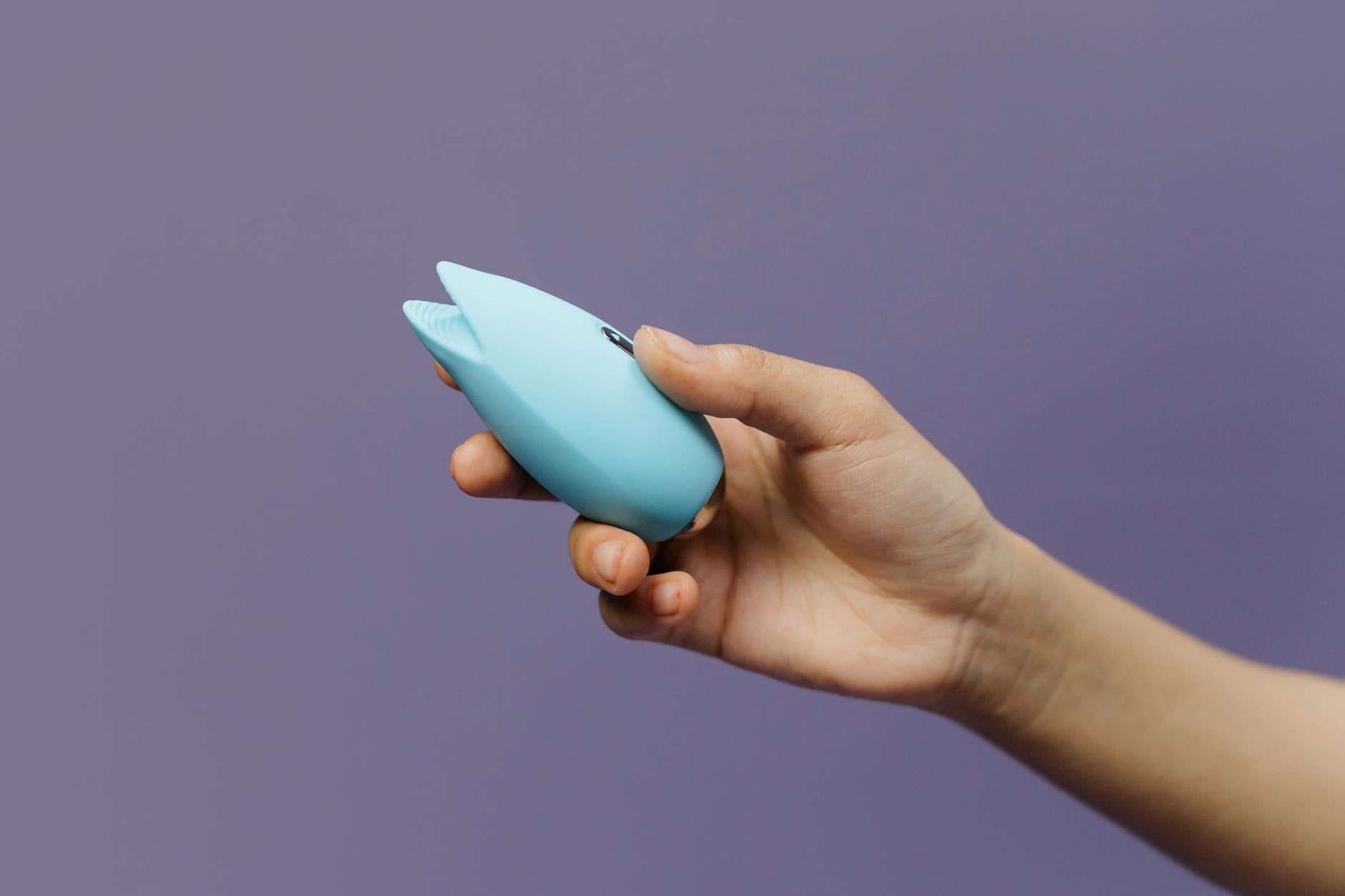
How to Use Lemon Vibrators When Your Partner Is Nervous About Toys
Your partner sees toys as a threat, not a tool. Here's how to reframe the conversation, move at their pace, and introduce a lemon clitoral vibrator without pressure.
Your partner isn't nervous about the toy itself. They're nervous about what the toy means. That's the conversation most couples miss, and it's why the "I think we should try something new" text lands like a rejection instead of an invitation.
When someone says they're uncomfortable with toys, what they're often hearing in their own head is: "I'm not enough," "You want someone different," or "This is a sign we're broken." None of that is true. But until you name it directly, the toy sits between you like evidence of a problem that doesn't exist.
I see this pattern in almost every couple I work with who's stuck on this one. It's rarely about prudishness. It's usually one of these:
They learned early that pleasure is solo or shame. If your partner grew up in an environment where sexuality was private, shameful, or tied to procreation only, introducing something explicitly for pleasure can feel like asking them to betray their own upbringing.
They think toys mean they've failed. This one runs deep. If you've been together for years and suddenly there's a vibrator, they read it as: "I haven't been enough." Even if logically they know that's not how bodies work.
They've heard bad stories. A friend's relationship ended after toys were introduced. A partner cheated and toys were involved. The narrative got baked in: toys = danger to the relationship.
They're worried about being replaced. A lemon clitoral vibrator does something different than a hand or mouth can. Some partners worry that means they're obsolete. (They're not. But they don't know that yet.)
They don't understand what it actually does. Lots of people think vibrators are meant as a substitute for partnered sex. They don't realize that suction-based toys like the Lem work in a totally different way and can actually deepen what you do together.
Pick a time that's not in the bedroom, not after sex, and not when you're both rushed. Say something like this:
"I want to try something new together, and I know that might feel scary. But I need you to know first that this isn't about you not being enough. It's about us exploring something that could feel really good, and I want to do it with you. Does that make sense?"
Wait. Let them talk. What they say next is the actual starting point.
If they say "I feel like I'm not enough," address that head-on: "You are completely enough. That's not what this is about. This is about adding something, not replacing anything."
If they say "I don't understand why we need it," that's an invitation to explain (without pressure): "Some people find that a different kind of stimulation opens up sensations they haven't felt before. I want to experience that together."
The goal here is not to convince them immediately. The goal is to make them feel heard and to separate the toy from any fear they're carrying.
Once they've said yes to a conversation, don't spring a toy on them. Show them one.
If you already have a lemon clitoral vibrator, leave it somewhere they'll see it matter-of-factly. Not hidden. Not ceremonial. Just... there. A charging cable next to the bed. A sleek toy sitting on the nightstand next to your glasses.
When they ask, "What's that?" you get to say: "It's a lemon vibrator. Want to see how it works?"
Let them hold it. Most nervous partners are shocked by how small and lightweight it is. They expect something aggressive or industrial. The Lem is the opposite. It's intuitive. It feels like something you'd actually want to explore.
Explain what it does without overselling: "It uses suction instead of vibration. It's really different from what you might be imagining. Here, I'll show you."
Use it on yourself first, in front of them if you're comfortable. This does three things: it desexualizes the moment slightly (you're focused on sensation, not performance), it shows them it's not scary, and it lets them see you enjoying something.
If they're ready to try together, here's the pace that actually works:
Session one. Foreplay as usual. When you're both aroused, introduce the toy to your own body while they're watching or touching you. No pressure for them to be inside you, use hands, or do anything different than normal. This time is just about them seeing that the toy doesn't change your connection. It adds to it.
Session two. Same setup, but now they use the toy on you while they're also touching you with their hands or mouth. This is important: the toy isn't replacing them, it's working alongside them. They're still actively involved.
Session three and beyond. You start to play with rhythm. They might want to hold the toy while you guide it. You might want to use it yourself while they focus on kissing you or touching elsewhere. You're building a new language together.
The whole arc from "I'm nervous" to "This is actually really hot" usually takes 3-5 times. Not because the toy needs to be sold, but because comfort and trust take repetition.
"You turn me on. This toy just changes how that feels." This is the cleanest truth. It separates you from the object.
"We're not broken. We're just exploring." Toys don't fix relationships, but they can deepen them. That's different from needing to be fixed.
"I want this because of you, not instead of you." If you mean it, say it. If they feel chosen, chosen in, the resistance usually evaporates.
"Tell me if you want to stop." Permission to opt out is actually what makes people want to stay. Pressure creates resentment. Consent creates curiosity.
If they're worried you'll become dependent on it and stop wanting them: "I still want you exactly as much. This is just another way we can connect."
If they're worried it means you're not satisfied: "I'm satisfied. I just also want to try this."
If they think it's degrading or weird: "Neither of us has to think it's cool. We just have to think it feels good."
If they're embarrassed: "I get it. You're allowed to feel weird about it. That doesn't mean we can't try."
The couple who moves through this successfully isn't the couple that wanted toys from the start. It's the couple where one person said "I'm scared" and the other person heard "I need reassurance first."
I mention this because the design matters. The Lem uses air-pulse suction, not vibration. That's actually less intimidating for partners who are already anxious.
It's also small, intuitive, and doesn't look aggressive. It looks like something designed for pleasure, not performance. That psychological shift is real. When your partner picks it up and says, "Oh, it's like... cute?" you know you're past the scariest part.
The other thing: suction-based toys work best when both partners are engaged. Unlike some vibrators, you can't just zone out. You're both present. That closeness is what rebuilds trust.
Sometimes after you introduce a toy to a nervous partner, something shifts in the relationship that has nothing to do with the toy itself. They realize you trust them enough to be vulnerable about what you want. They see you enjoying yourself fully. They get to participate in expanding the relationship rather than defend the status quo.
Take them at their word. A relationship can be deeply satisfying without toys. But notice if the "no" is firm or if it's "not yet." Those are different conversations. If it's truly a hard boundary, respect it. If it's fear that might shift with time and reassurance, that's worth patience.
Timing is everything. Not during sex, not when you're stressed, and not in a text. Face-to-face, calm energy, and a statement that leads with what you want to add (not what's missing) works best. "I've been thinking about trying something new together" lands differently than "I'm not satisfied."
Stop. Check in. Ask what they're feeling. Sometimes discomfort is just newness and will pass. Sometimes it's a deeper worry that needs talking through. You won't know if you don't ask. The toy can wait until they're actually ready.
Absolutely. That's actually where toys shine for busy couples. Foreplay with a lemon vibrator is quicker, more focused, and you both get there faster. Time becomes less of a barrier. See our guide on how to use lemon vibrators for foreplay when you have limited time for specific timing strategies.
That's a different boundary and worth respecting. Partnered pleasure and solo pleasure serve different purposes. If they want privacy with their own exploration, that's totally fine. It doesn't mean they'll never want to try together, but forcing it will only create resentment.
There's no too fast or too slow if you're both saying yes and checking in. The pace that works is the one where you're both curious, not anxious. If someone is tense or quiet, pause. If someone keeps wanting to try more, that's your sign to keep going.
A nervous partner isn't a broken one. They just need reassurance that pleasure is collaborative, that toys aren't a referendum on the relationship, and that you're in this together.
Start with the conversation. Then start with your own body. Let them watch, let them touch you, let them hold the toy while you guide it. Move at a pace where they stay curious instead of scared.
Most couples who start here find that introducing something like a lemon vibrator becomes the moment they realized they could be vulnerable together. And that changes everything.
If you're ready to explore further with your partner, reach out to us and we can help answer more specific questions about your situation.