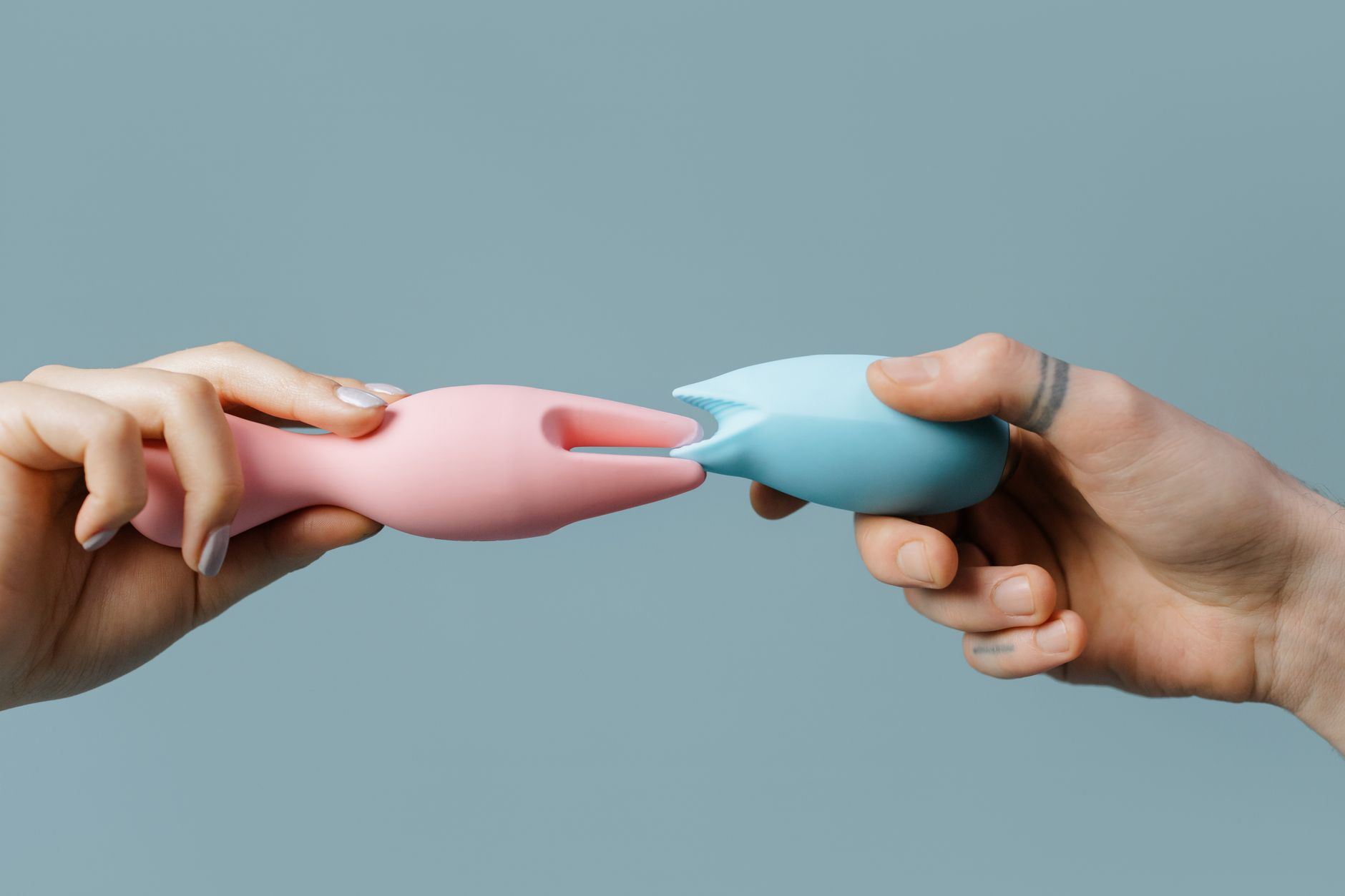
Your partner doesn't want you to have a lemon vibrator because they think it means they're not doing their job. That's the real issue underneath everything else. It's not actually about the toy. It's about feeling replaced.
Here's the thing: that fear is coming from somewhere real. But it's also built on a misunderstanding about how pleasure works. A lemon clitoral vibrator isn't competition. It's a different tool that does something hands and bodies can't replicate on their own.
There are usually three things happening when someone feels intimidated by a sex toy.
First, there's a cultural story they've absorbed. The one that says real sex should be "natural" and that needing or wanting anything extra means something is broken. Second, there's often shame about their own body or performance. If they're worried they're not enough, a vibrator confirms it. Third, there's genuinely low information. Most people aren't taught that toys are about addition, not replacement.
None of those things go away by hiding your lemon vibrator in a drawer or pretending you don't want one. They fester. So the actual move is to have a conversation that separates the toy from the relationship.
Don't spring a vibrator on someone mid-foreplay. That's not how this works.
Find a time when you're both clothed, calm, and not heading toward sex. Say something like: "I've been thinking about us and what feels good for me. I want to try something that might help me feel more pleasure, and I want to try it with you, not without you." That last part matters. You're not asking permission to masturbate in secret. You're saying this is about deepening what you do together.
Then be specific about what a lemon vibrator does. It's a suction-based device that creates a specific type of stimulation your fingers and their hands can't replicate. It's not better than anything they do. It's different. And it's something you can enjoy together.
Listen to what they say next. Often it's "But that means I'm not enough." When you hear that, name it directly: "That's what you're worried about? Because that's not what this is." Then explain the actual mechanics. A vibrator can't replicate emotional intimacy. It can't replicate the feeling of being with someone you love. What it can do is provide consistent stimulation in a way that takes the performance pressure off both of you.
This is the crucial reframe. You're not asking your partner to sit on the sidelines while a toy does all the work. You're inviting them into something new.
When you finally introduce a lemon vibrator, here's what that actually looks like:
You control the intensity. Your partner can watch, touch you in other places, be involved in every decision about speed and pressure. They can hold it if they want. They can learn what patterns make you respond. This is information about you that they've never had before. That's not threatening. That's intimate.
Many partners find that watching their person experience intense pleasure from something specific is actually hot. It's like learning a new part of them. And if communication is happening at the same time ("Yes, more of that," "A little slower here"), you're building something together, not creating a distance.
Start small. Don't make this a whole production with rose petals and ceremony. Just mention it during a regular intimate moment. "I want to try something. Want to see?"
If they're uncomfortable at first, ease up. You're not forcing this. But don't abandon it because of one awkward moment either. Discomfort is normal when someone's facing something unfamiliar.
When you use a lemon vibrator together, involve them. Ask them to touch other parts of your body while you're using it. Ask them to watch your face and tell you what they notice. Ask them what they're feeling. The conversation during matters as much as the physical sensation.
If penetration is part of your regular intimacy, a lemon clitoral vibrator actually enhances that, not replaces it. You can use it before, during, or after. Your partner is still present. They're still involved. The vibrator is just one part of what's happening.
Honestly, this whole dynamic often points to something bigger. If your partner is very threatened by a toy, they might also struggle with other forms of independence or change. That's worth looking at together, ideally with a therapist who specializes in couples work.
But here's what I've seen in my practice: once a partner realizes that you're not trying to escape them, that you actually want to experience pleasure with them present, that a lemon sexual toy is a way to feel better together, the threat dissolves. It's replaced by curiosity. Sometimes by excitement.
The key is that you have to do the emotional work first. The toy is secondary. If you bring in a vibrator before you've addressed the underlying fear, you're just confirming it.
Sometimes even after a good conversation, a partner digs in. They say no. They say toys aren't for them. They say it makes them uncomfortable and they don't want to discuss it further.
You have a choice at that point. You can accept their boundary. You can also choose not to. This is a values question, not just a sex question. If your sexual pleasure matters to you, and your partner is actively preventing you from exploring it, that's a relationship problem that goes way beyond lemon vibrators.
Many people find that their pleasure matters deeply, and that they're willing to have a real conversation about it. Sometimes that conversation happens with a therapist. Sometimes it happens over months. But it happens.
If you're in a partnership where your desires are regularly shut down, that's worth examining. A toy isn't the issue then. Access to your own pleasure is.
I've worked with dozens of couples where one partner was intimidated by toys and the other wanted them. The ones who moved through the discomfort together almost always report back that their sexual connection actually improved. Not because of the toy, but because they finally had a conversation about what they wanted and who they were to each other.
A lemon vibrator becomes a symbol of something larger: permission. Permission to want things. Permission to ask for them. Permission to explore together. That's what changes a relationship.
Your partner's fear is real. So is your desire for pleasure. Both things can exist at the same time. The vibrator is just the small, plastic thing that makes you confront the bigger question of what you both actually want from each other.
Partners often feel threatened by vibrators because they interpret them as a sign they're not satisfying their partner. This stems from cultural narratives about "natural" sex and learned shame around sexual performance. In reality, a vibrator is a tool that does something hands and bodies can't replicate on their own. It's not a replacement for human connection, intimacy, or emotional presence. The threat is usually rooted in low information and absorbed messaging about what sex "should" look like, not in any actual inadequacy on their part.
Have the conversation outside the bedroom, when you're both calm and clothed. Frame it as something you want to explore together, not something you want to do alone. Say something like: "I want to try something that might help me feel more pleasure, and I want to try it with you." Explain specifically what a lemon clitoral vibrator does and why. Listen to their fears. Name them directly. Then separate the tool from the relationship: the vibrator isn't a comment on them, it's an addition to what you already have together.
Absolutely. In fact, that's often the best way to introduce one. Your partner can watch, touch other parts of your body, hold the device if they want to, or learn which patterns make you respond most intensely. This is information about your pleasure they've never had before. When communication is happening at the same time (you're telling them what feels good), you're building intimacy, not creating distance. The vibrator becomes something you explore together, not something you do alone.
Take their discomfort seriously but don't abandon your own pleasure. Express that your sexual satisfaction matters to you and ask what specifically frightens them. Often a deeper conversation reveals it's about feeling replaced or inadequate. If they won't engage in that conversation or if they continue to shut down your desires after you've explained yourself, you're facing a relationship issue that may benefit from couples therapy. Your pleasure is not selfish. It's a valid part of your wellbeing.
It varies widely. For some couples, comfort arrives in one conversation. For others, it takes weeks or months of discussion and gentle exposure. The timeline depends on the partner's baseline anxiety around sexuality, their history, and how much information and reassurance helps them. What matters most is consistency from you. If you keep the conversation open, avoid being shaming about their fear, and demonstrate that the vibrator is genuinely about connection, most partners move toward acceptance eventually. If they don't, that's information about the relationship itself.
There's no single right answer, but introducing it together often works better for couples work. If you use it alone first and your partner finds out, it can confirm their suspicions that you're hiding something. Instead, have the conversation first, then try it together. When they're present, the experience becomes collaborative rather than secretive. That said, if your partner refuses to be involved and you decide to use a vibrator anyway, that's your choice. You deserve access to your own pleasure regardless of their comfort level.
Gottman, J. M., & Silver, N. (2015). The seven principles for making marriage work: A practical guide from the country's foremost relationship expert. Harmony. The Gottman Institute's research on couples communication and vulnerability in relationships informed the conversational frameworks in this article.
Perel, E. (2018). Mating in captivity: Unlocking erotic intelligence. Harper. Perel's work on desire, novelty, and maintaining sexual connection in long-term relationships provides context for why partners may resist new tools and how that resistance often reflects deeper relationship dynamics.
Schick, V., Calabrese, S. K., Herbenick, D., & Rosenberger, J. G. (2016). Gendered language and its implications for sexual health. Archives of Sexual Behavior, 45(4), 873-881. Research on how gendered communication about sexuality impacts couple dynamics and willingness to explore together.
Young, M., Denny, G., Luquis, R., & Young, T. (2000). Sexual satisfaction among married women age 50-60. Psychological Reports, 86(3), 1107-1110. Foundational research on sexual satisfaction in long-term partnerships and the role of communication and exploration.