
Let's name the thing nobody talks about
Pleasure guilt is real. It shows up as a voice that says you don't deserve this, that wanting feels selfish, that your body asking for something means you're broken or ungrateful or unfeminine or unfaithful or just plain too much. Shame doesn't whisper. It shouts.
And here's what it does: it disconnects you from sensation before you even touch yourself. You can have the best lemon clitoral vibrator in the world, but if shame is sitting in the room with you, that tool becomes useless. Not because the vibrator doesn't work. Because you won't let yourself feel it.
Where shame about pleasure actually comes from
It's not random. Shame gets installed early and runs deep. Maybe you grew up in a household where bodies weren't discussed. Maybe religious teaching told you desire was dangerous. Maybe you got the message that good women don't initiate, don't ask, don't want too much. Maybe you were told your sexuality was your currency, not your birthright. Maybe you watched someone you love get shamed for wanting, and you learned the lesson without anyone spelling it out.
Or maybe it's quieter than that. Maybe you just absorbed the cultural idea that your pleasure is less important than your partner's, that wanting lemon vibrators or any kind of sexual tool makes you high-maintenance, that being satisfied requires explanation or justification.
The source doesn't have to be dramatic for the effect to be total. Shame is cumulative. It lives in your nervous system.
Why pleasure shame is a relationship problem, not a personal one
If you're partnered, shame doesn't stay private. It leaks into the sexual relationship as distance, as difficulty communicating what you want, as a vague sense that something's missing but you can't name it. Your partner picks up on the shutdown. They might push, or they might retreat. Either way, you both end up frustrated.
Single people experience shame differently but just as powerfully. Solo pleasure feels like something you have to hide, something you shouldn't need, something that makes you feel alone rather than alive. You might avoid toys entirely rather than confront the discomfort of knowing you own them.
The nervous system piece (why willpower doesn't fix this)
Shame is a nervous system state, not a thought problem. This matters because you can't logic your way out of it. You can't tell yourself "pleasure is fine" and have your body believe you if your nervous system is in a shame activation.
When your nervous system is dysregulated by shame, arousal literally can't access the same pathways. Your body tenses. Your breathing becomes shallow. You might feel physically numb or hypersensitive. Blood flow shifts. The same clitoral stimulation that might feel incredible in a different state feels invasive or uncomfortable or nothing at all.
This is why introducing a lemon vibrator while shame is active doesn't work. You're trying to overlay pleasure on top of a nervous system that's been told pleasure isn't safe.
The first step: permission building before the tool
You need to befriend your body before any lemon sexual toy can help. Here's what that looks like in practice.
Start by touching yourself without expectation of anything. Not for arousal, not for orgasm, not for proof that you're normal. Just to feel texture and temperature. Your forearm. Your neck. The inside of your wrist. Five minutes, no agenda. Notice what your nervous system does. Does it relax? Does it tense?
Then notice what story shows up. Is there a voice that says this is wrong? That you're wasting time? That someone's watching? That you're being selfish? Don't argue with the voice. Just notice it. Name it.
Repeat this for a week. The same small amount of time, no pressure. You're teaching your nervous system that touch is safe before you introduce anything that vibrates.
How lemon vibrators specifically address shame (once your system is ready)
Here's what makes clitoral vibrators different from manual stimulation when you're working through shame. Touch another person gives requires vulnerability and permission. Even touch you give yourself carries cultural weight about whether you "should."
A vibrator is neutral. It doesn't judge. It doesn't want anything from you. It doesn't have an opinion about whether you deserve pleasure. It's just sensation.
For people working through shame, that neutrality is powerful. The vibrator becomes a teacher. It says through its own existence: pleasure is a thing your body can have. You don't need permission to feel it. The fact that it exists and works means the capacity is already inside you.
Start at the lowest setting. The lemon vibrator's patterns are designed not to overwhelm. Pattern 1 is gentle, almost conversational. You're not trying to orgasm. You're trying to build evidence that sensation plus your body equals safe.
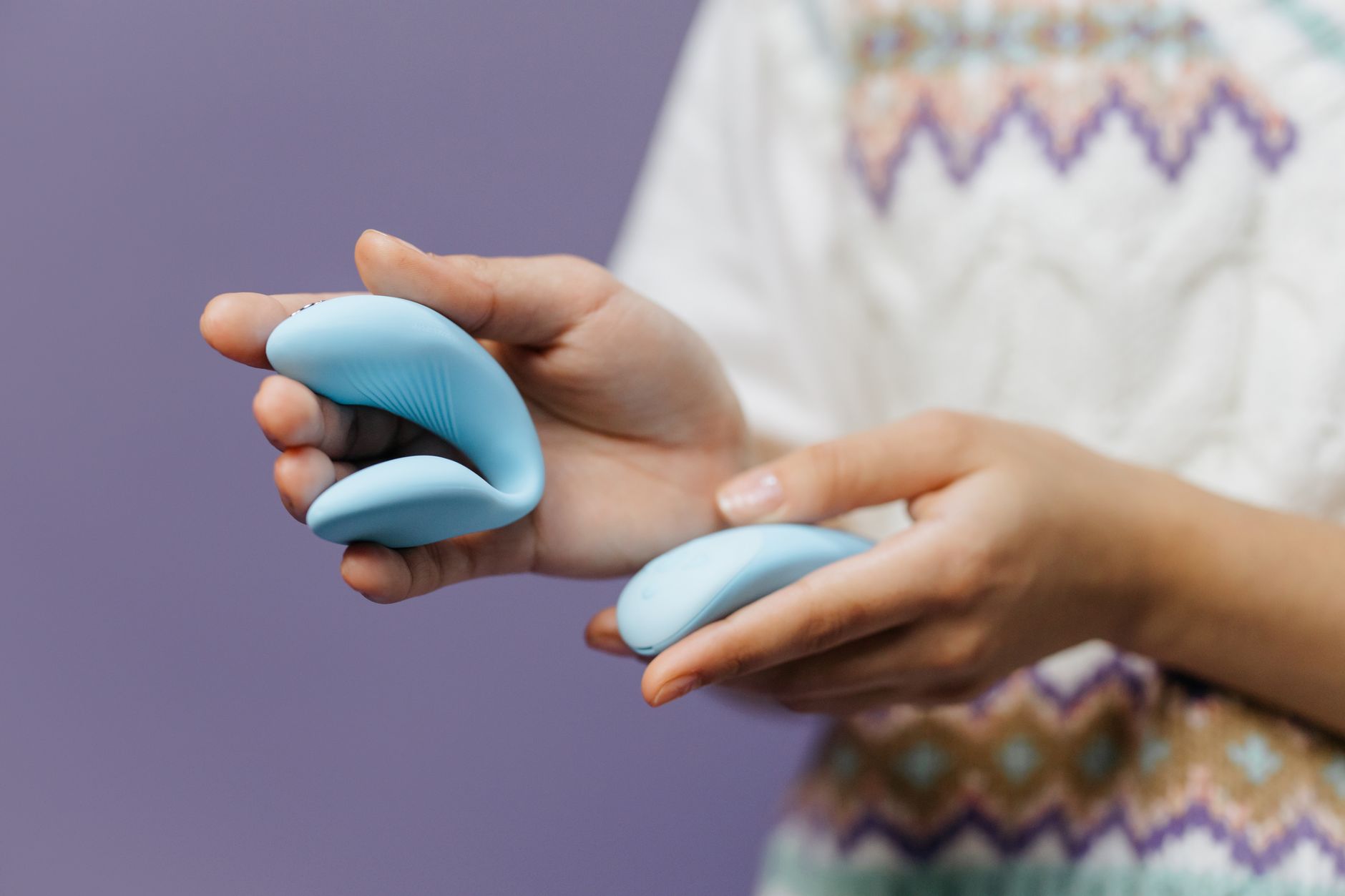
Photo by cottonbro studio on Pexels
The role of lubrication in shame processing
This might sound unrelated, but it's not. When shame activates your nervous system, you produce less natural lubrication. Your body literally dries up. This creates a problem: friction without adequate lubrication feels uncomfortable, which your brain interprets as more evidence that pleasure isn't for you.
Use lube before you use a lemon vibrator. Water-based works best. This removes the physical barrier to sensation and tells your nervous system: I'm taking care of myself. I'm preparing. This is allowed.
Lube is permission materialized.
Building the bridge from solo exploration to partnership (if that's your goal)
If you have a partner, they probably know something's off even if you haven't named it. They might not know it's shame. They might just feel the distance.
You don't have to share everything. But you might eventually want to share some version of this: "I'm working on reconnecting with my own pleasure because I got messages that it wasn't okay. This isn't about you. It's about me letting myself have something I've been told I shouldn't want."
That might lead to a conversation about whether they can support this. Whether they're willing to give you space and time to rebuild this part of yourself. Whether they can understand that pleasure shame often shows up as reduced desire, reduced arousal, difficulty with orgasm. Not because something's wrong with them. Because your nervous system has been trained to shut down.
Many partners, once they understand, become incredible partners in this work. They become protective of your time alone. They ask what helps. They recognize that your pleasure is not a threat to them. It's a gift to both of you.
What happens when you stick with this
Over time, using a lemon clitoral vibrator becomes different. It stops being a thing you do and starts being a thing you want. The shame voice gets quieter, not because you've argued with it, but because your body has new evidence. Evidence that pleasure is possible, that your desires are normal, that your nervous system can regulate enough to feel good.
Most of my clients report that after six to eight weeks of consistent, no-pressure exploration, something shifts. Not a breakthrough moment usually. Just a slow understanding that they deserve this. That wanting is okay. That pleasure isn't selfish.
From there, everything changes. Not because the vibrator is magic. Because you've given yourself permission.
FAQ
What if I still feel guilty even when I'm alone with a vibrator?
That's your nervous system being loyal to old instructions. It's not a sign you're broken. It's a sign the shame runs deep. This is when working with a therapist can help you understand where those instructions came from and actively teach your nervous system new ones. In the meantime, keep going. Guilt and pleasure can coexist. You don't have to wait for guilt to disappear.
Can a partner help me work through this, or does it have to be solo first?
Depends on the partner and the dynamic. If your partner is safe and willing to move slowly, they can be part of the process. But many people find it's easier to start solo because there's no performance aspect, no partner reactions to manage, no history of pain in that relationship. Start where it feels most possible. You can add partnership later.
How do I know if what I'm feeling is shame or just lack of arousal?
Shame usually comes with a moral or emotional weight. A voice that says something is wrong with you. Lack of arousal is more neutral. Your body just isn't responding. You can check by noticing: is there a story attached? Something about whether you should or shouldn't? That story is shame. If there's no story, just absence of sensation, it's likely something physical or contextual, not shame-based.
Is it normal to feel anxious the first time I use a lemon vibrator?
Completely normal. Anxiety is often what shame looks like in your body. Your nervous system is protecting you from something it thinks is dangerous. Use the vibrator for two minutes. Notice the anxiety doesn't destroy anything. Build that evidence slowly. Anxiety usually fades with repetition and safety.
What if my religion or cultural background taught me that masturbation or vibrators are wrong?
That's a values question only you can answer. But here's what I know: your body and your pleasure are part of your life, whether you engage with them or not. If you want to explore because you're curious, because you want connection with your own body, because you want to understand yourself better, that's a legitimate reason. You don't need permission from anyone to be curious about yourself. Whether you act on that curiosity is your choice.
How long before using a lemon vibrator actually feels good instead of just feeling weird?
Weird usually becomes good in three to four weeks of consistent use. Expect two to three weeks of neutral or slightly uncomfortable before pleasure registers. Keep going. Your nervous system is learning that this is safe. That learning takes time.
You deserve this
Shame tells you that pleasure is off-limits, that wanting makes you selfish, that your body's desires are too much. None of that is true. Your pleasure matters. Your body deserves attention and sensation and care. The fact that you're reading this means you already know something is different on the other side of shame. You're right. It is.
Start small. Start solo. Start without expectation. A lemon vibrator, when your nervous system is ready, becomes a simple tool for reconnection. But first comes permission. And permission, I promise, is always yours to give yourself.
Ready to explore what pleasure can feel like? Get in touch if you want to talk through this further or need support navigating shame around sexuality. You don't have to do this alone.