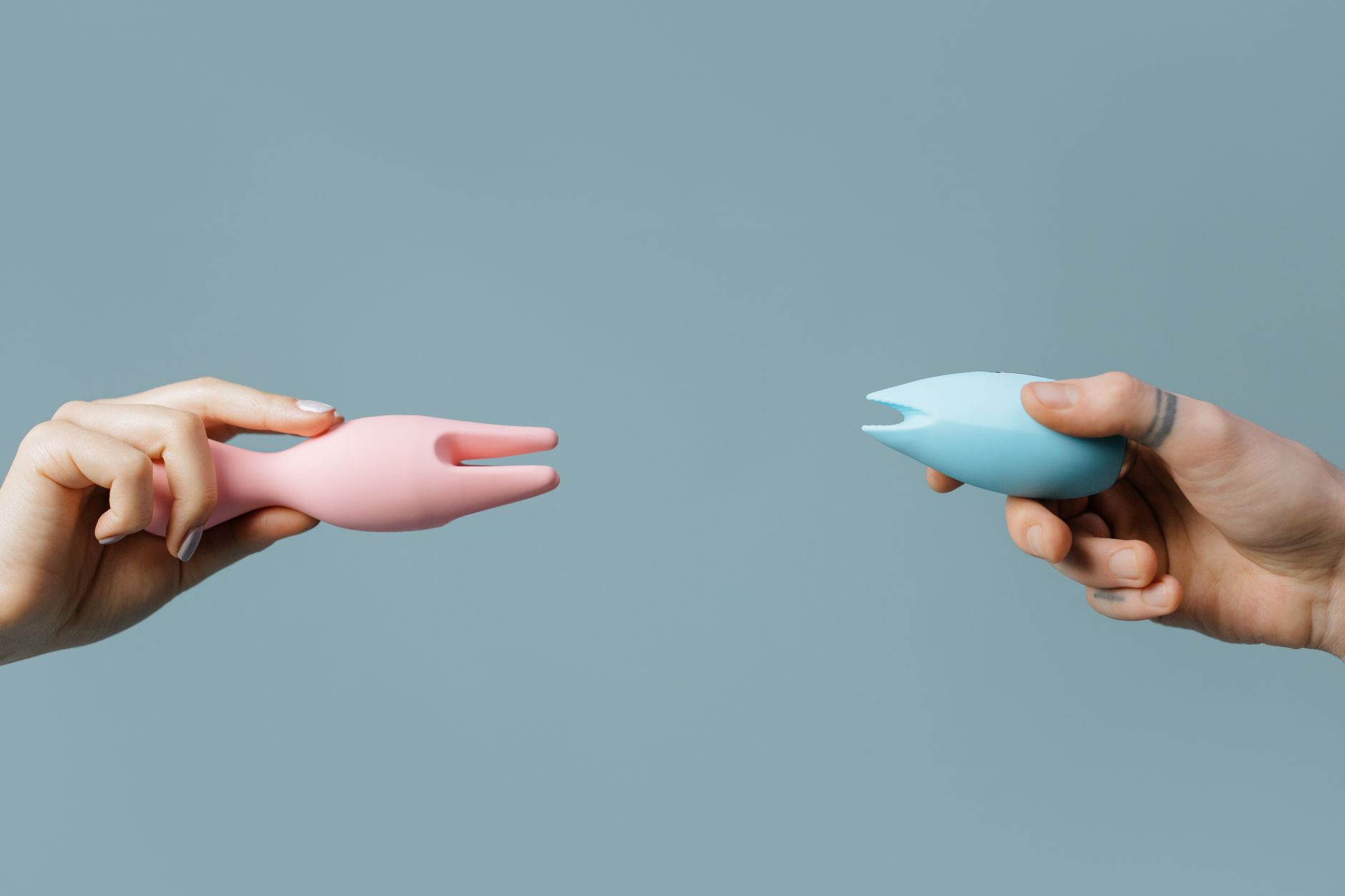
How to Use Lemon Vibrators for Pleasure When You're Over 50
Pleasure doesn't expire at 50. Lemon vibrators actually work better for many people after menopause. Here's how to use them, what to expect, and why your best orgasms might still be coming.
Let's be real. At 50, your body is different. Your skin is thinner in some places, thicker in others. Your hormones have shifted. Your attention span for bad sex is zero. But here's what nobody tells you: lemon vibrators often work after menopause than they did before.
I work with women and people with vulvas in their 50s, 60s, and beyond. The ones who experiment with clitoral vibrators report some of their most intense orgasms during this phase of life. That's not a polite thing therapists say. That's what I actually see in my practice.
Estrogen drops after menopause. This means the tissue around your clitoris and vulva gets thinner and more sensitive. You'd think this would make vibration uncomfortable. Often the opposite happens.
Thinner tissue has less physical buffer between the nerve endings and the sensation. When you use a lemon vibrator, which works through suction and gentle pulse patterns rather than harsh friction, the stimulation reaches those nerves more directly. The result feels sharper, cleaner, sometimes more satisfying than it did when you were 35.
Your pelvic floor also changes after 50. It has less estrogen support, which means it can feel tighter or less responsive. But this tightness, paradoxically, can intensify sensation. Some of my clients describe orgasms after 50 as more concentrated, more local to the clitoris itself, rather than the full-body waves they remember from their 20s and 30s. Both are wonderful. Different wonderful.
Another shift: your brain calms down. The mental chatter that used to interrupt sex quiets. You're less likely to be thinking about work, your body image, or whether you're taking too long. That cognitive shift alone transforms pleasure.
Lemon vibrators, sometimes called lemon suckers or suction toys, work differently than traditional vibrators. Instead of harsh vibration, they use gentle suction and air-pulse patterns. This matters after 50 because your tissue doesn't want the same kind of direct friction it might have tolerated younger.
The suction method draws the clitoris slightly into the toy's chamber, then releases in a rhythmic pattern. It's gentler on thinner tissue. It doesn't require the clitoris to move under intense vibration. For people over 50 with low estrogen, this is often exactly what feels best.
You'll notice a few things right away. First, you'll get aroused faster than you did when you were much younger, which surprises people. The thinner, more sensitive tissue responds more quickly to stimulation. Second, orgasms often come in waves or multiples. You might have one orgasm, rest for 30 seconds, and have another. This stacking effect is common after 50 and feels different from the single intense peak you might remember.
Third, the orgasm itself often feels different. Younger bodies sometimes produce orgasms that radiate outward. Over 50, many people describe them as more local, more concentrated at the clitoris. Intensity doesn't drop. Location shifts.
Position matters more after 50 because your joints have less flexibility and your body has preferences it didn't have before.
Sitting upright works well. Prop yourself against pillows so your back is supported at about a 45-degree angle. Your legs can be bent or straight, whatever feels stable. This position gives you control and takes pressure off your lower back, which tends to be sensitive after years of sitting and bearing weight.
Lying flat works too, especially if you're using the lemon vibrator during partnered sex. Lying on your side is often the most comfortable for long sessions because it takes weight off one hip and allows your core to relax.
Avoid positions where you're folded forward hard or where one leg is twisted under you for long periods. Your body will tell you fast if a position isn't working. Listen to it.
This is the biggest shift I see people struggle with. Low estrogen means less natural lubrication. This is not a sign something is broken. It's a normal hormonal change. The fix is simple: use lube.
Water-based lubricant is your safest bet. Silicone lube lasts longer and feels richer, but it can damage silicone toys if you don't clean them carefully afterward. With a lemon vibrator made of silicone, water-based is the move.
Apply lube generously. More than you think you need. The goal is glide without friction. A dry clitoris and a vibrator create irritation, not pleasure. Wet and slippery creates the sensation you're after.
Reapply halfway through a longer session. Lube dries. It's not a sign you're doing something wrong.
Start with the toy off. Apply water-based lubricant to the opening of the toy and to your vulva. Take time to warm up your body. This matters more after 50 than it did before. Fifteen to 25 minutes of foreplay, either solo or with a partner, sets your nervous system up for easier arousal.
When you're ready, turn the lemon vibrator to its lowest setting. The lowest. Not because you're fragile, but because lower intensity on more sensitive tissue often creates a sharper sensation that reaches the nerves faster. You can build intensity from there.
Position the opening of the toy against your clitoris. Some people like direct contact. Some like it slightly off to one side. Experiment. The toy doesn't need to stay still. Slow small movements, a slight rock side to side, can feel better than stationary suction.
Listen to what your body tells you. If it feels good, stay with it. If it feels like too much, drop back a setting or step back entirely. You don't have to hit an orgasm target. Sometimes the pleasure is in the exploration.
Many people find that after 50, they need longer to reach orgasm. This is not a problem. It's not a sign of dysfunction. It's a timing shift. Budget 20 to 40 minutes instead of 10 to 15. Good sex at 50 is not a sprint.
Sometimes over 50, the tissue becomes sensitive to direct stimulation in a way that feels uncomfortable rather than good. This is called genitourinary syndrome of menopause (GSM), and it's treatable.
If direct stimulation from the lemon vibrator feels sharp or painful, try this: place a thin cloth between the toy and your skin. Silk works well. Cotton works. It mutes the sensation just enough while maintaining the pleasure. Many people find they can gradually decrease the cloth thickness as they adjust.
If the discomfort continues, talk to a gynecologist trained in menopause care. Topical estrogen cream used for two to four weeks often changes everything. It's not systemic. It doesn't go throughout your whole body. It works locally to restore tissue thickness and comfort.
Partner dynamics often shift after 50. You might have been together for 30 years, or this might be a new relationship. Either way, introducing a lemon vibrator into partner sex requires one conversation: talk first, use second.
The most successful conversations are specific, not abstract. Instead of "I want to use a vibrator," try "I've been curious about clitoral vibrators. I'd like to try one during sex with you. It might feel good for both of us because it will let me climax faster, and that takes pressure off both of us."
That's information. That's actionable. That's not threatening.
When you use the toy with a partner, position yourself so they can see and participate. Lying on your back with your head propped up lets you look at each other. Let your partner hold the toy if that feels right. Communicate in real time: a little higher, slower, that pressure. This is not about performance. It's about pleasure.
"Will it make me dependent on vibration?" No. Dependence typically works the opposite direction. People who use clitoral vibrators often report better orgasms during partnered sex too because they understand their own nerve response better. The vibrator is a tool for learning, not a crutch.
"Is it normal that it takes 40 minutes to come?" Yes. After 50, longer arousal time is standard. It's not failure. It's different. Budget the time. Stop rushing. You'll enjoy it more.
"Can I use it if I'm on HRT?" Absolutely. HRT might shift your response slightly, which is good. You might find orgasms come faster or feel more intense on hormones. Use the toy the same way.
"What if my partner feels threatened?" This is real. Some partners do. The research shows couples who introduce toys together report better sexual satisfaction overall. If your partner is resistant, that's a deeper conversation about trust and intimacy, not a vibrator problem.
After 50, you've earned good self-care practices. Your lemon vibrator deserves the same.
Clean it after every use. Warm water and mild soap work fine. Pat it dry and store it in a clean, dry place. Keep it out of direct sunlight. Don't share it without cleaning it thoroughly first.
Replace the battery or charge it according to the manufacturer's instructions. A toy that's losing power is a toy that stops working well, and you deserve equipment that performs.
If the silicone starts to feel sticky or degraded after years of use, it's time to replace it. A toy is not an heirloom. It's a tool. Treat it with respect and replace it when it shows its age.
I see women and people with vulvas over 50 who've spent decades not prioritizing their own pleasure. They had kids. They had careers. They had partnerships that didn't always center their needs. By 50, they've often earned the headspace to ask: what do I want?
That question is gold. And the answer often involves lemon clitoral vibrators.
Your body at 50 is not your body at 25. It's your body at 50, which is wiser, clearer, and often more capable of intense pleasure than it was before.
Yes, absolutely. HRT can actually enhance your response to clitoral vibrators because it restores some estrogen to your tissue, making it thicker and more responsive. You might find that orgasms come faster or feel more intense on HRT. The sensation is often more similar to what you remember from your younger years, though not identical. Use the vibrator the same way regardless of HRT status. If HRT changes your experience, that's information about what works best for you now.
There's no time limit. Some people spend 15 minutes, some spend an hour. The key is that after 50, you often need longer for arousal to build. Budget 20 to 40 minutes for a full session that includes foreplay and play with the toy. Don't watch the clock. When your body says it's done, it's done. The goal is pleasure, not performance.
Completely normal. Low estrogen after menopause means less natural lubrication. This is not a sign something is wrong. It's a hormone shift. Water-based lube becomes a regular part of your pleasure toolkit after 50, just like it might not have been before. Use as much as you need. There's no such thing as too much lube.
Sometimes, depending on the cause. If pain is due to muscle tension or difficulty with arousal, a lemon vibrator can help by building stronger, faster arousal. If pain is due to thin tissue or dryness (genitourinary syndrome of menopause), a vibrator alone might not be enough. Talk to a menopause-trained gynecologist. Topical estrogen cream combined with a vibrator often works well. Never push through pain. Pain is data.
No. Many people over 50 enjoy solo pleasure with a lemon vibrator. In fact, solo exploration often helps you understand what feels good so you can communicate better with a partner if you have one. There's no rule that says vibrators are only for partnered sex. Your pleasure is valid whether you're alone or with someone.
Traditional vibrators use direct vibration on the clitoris. Lemon vibrators use suction and pulse patterns. For people over 50 with thinner, more sensitive tissue, suction often feels gentler and creates a different kind of sensation. It's less jarring, more focused. Many people over 50 find lemon vibrators more satisfying than traditional vibrators, though everyone is different. You might like both. You don't have to choose.
You're 50. Your body is different. Your pleasure is not expired. A lemon clitoral vibrator, used with lube, patience, and curiosity, can deliver some of the best orgasms of your life.
Start slow. Use plenty of lube. Give yourself time. Listen to what feels good. This is not performance sex. This is pleasure on your own terms.
If you have questions about what's normal, what's possible, or what might help with specific concerns, that's what we're here for. Get in touch anytime.