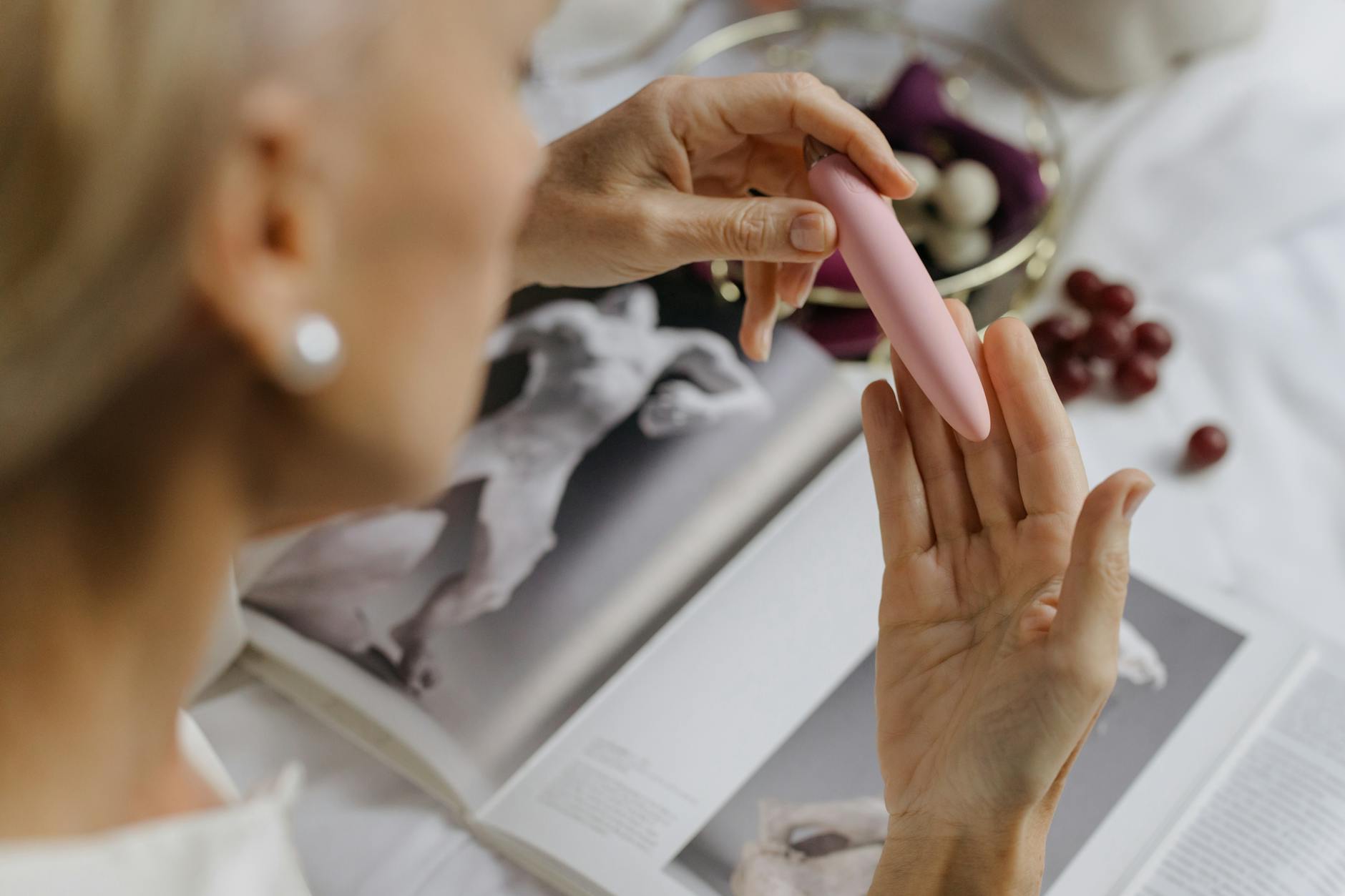
Here's what nobody tells you about pregnancy and postpartum pleasure
Your body doesn't just change during pregnancy and after birth. Your pleasure response changes too. Some people feel more sensation, more arousal, more intensity. Others feel almost nothing. Most experience both at different times, which is weirdly disorienting.
The tricky part is that nobody prepares you for this. Pregnancy guides talk about swollen breasts and morning sickness. Postpartum recovery advice focuses on healing stitches and bleeding and sleep deprivation. But sensation? Arousal? That's treated like either something that magically comes back on its own or something you're not supposed to want yet. Both are lies.
What pregnancy actually does to sensation
Pregnancy floods your body with hormones (mainly estrogen and progesterone) that affect everything from blood flow to nerve sensitivity. For the first trimester and into the second, many people report heightened clitoral sensitivity. The area becomes more engorged because there's just more blood flow everywhere. Some describe it as almost uncomfortable.
But here's the contradiction: around the same time that physical sensitivity peaks, arousal itself can crater. Nausea, fatigue, and the psychological weight of carrying another life can make desire feel like a foreign concept. You might have the physical capacity for pleasure but zero mental availability for it. That's not a sign something's wrong. That's just what early pregnancy does.
By the third trimester, the situation often flips. The initial sensitivity can dull slightly, but many people report that orgasms feel different. Deeper, sometimes more intense. Partly that's the weight of pregnancy itself putting gentle pressure on the pelvic floor. Partly it's psychological permission. You're already taking up space. You might as well enjoy it.
Postpartum is when sensation gets really strange
After birth, whether vaginally or by caesarean, tissue changes dramatically. If you gave birth vaginally, you have stitches, swelling, and sometimes scar tissue forming as everything heals. If you had a caesarean, the incision site requires months to fully knit together, and the deeper tissues take even longer. Both paths lead to a period where external stimulation can feel too intense, too tender, or bizarrely muted.
At the same time, breastfeeding (if you're doing it) creates a specific kind of sensory chaos. Your breasts are producing milk, which means they're sensitive and often uncomfortable. Nipple stimulation, even gentle stuff, can trigger let-down reflex, which is the literal opposite of erotic. Your body is correctly prioritizing feeding a tiny human. But it's also hijacking your nervous system in ways that make sexual touch feel either impossible or like a foreign language.
Hormone-wise, postpartum is similarly disorienting. Estrogen drops sharply after birth, which is the opposite of pregnancy. Progesterone also tanks. Prolactin rises (especially if breastfeeding), which actively suppresses libido. Basically, your body chemistry is working hard to keep you focused on the baby, not on pleasure.
Why lemon clitoral vibrators work differently during these phases
Lemon vibrators, especially models with suction-based stimulation, have a specific advantage during pregnancy and postpartum: they don't require direct friction.
During pregnancy, when tissues are hypersensitive and swollen, friction can feel overwhelming. A suction vibrator like the Lem applies gentler, broader stimulation that works with the heightened sensitivity rather than against it. The sensation is almost like drawing energy upward rather than the back-and-forth pressure of a traditional vibrator. For early pregnancy when you're battling nausea and fatigue, a device you can use while lying down without much effort is a practical win.
Postpartum, after vaginal delivery especially, direct vibration on healing tissue is just not happening for the first 4-6 weeks (and realistically, many people need 8-12 weeks before they want anything touching that area). A suction vibrator is gentler, and because it works externally with the engorged clitoral complex rather than pushing into sensitive entry tissue, it can feel safer.
The other thing: lemon clitoral vibrators come in different intensity levels. During pregnancy and postpartum, when sensation is unpredictable, having the option to start at a lower setting and build up is essential. You're not trying to chase an orgasm at intensity level 5. You're exploring what your body can feel today, at this moment, in this healing phase.
The practical adjustments that actually help
Here's what I recommend to people navigating pleasure during pregnancy and postpartum:
During pregnancy
If you're in the early weeks when nausea is brutal, solo pleasure using a lemon sucker vibrator might be the only thing that works because you're lying down the whole time and the low-effort sensation doesn't add to your exhaustion. Start on the gentlest setting. Many people find that working with their body's natural arousal arc (which is slower but sometimes more intense in pregnancy) means less pressure and more actual sensation.
If your partner wants to be involved, lemon vibrators are a way to share pleasure without the pressure of penetration, which itself can feel uncomfortable when your body is expanding. It's lower-stakes, easier to pause, less performance-based.
In the postpartum window (first 6-8 weeks)
Wait. Just wait. Using any vibrator on freshly healing tissue is asking for complications. But knowing you have a gentle tool waiting for you when your care provider gives you the all-clear changes the mental landscape. You're not waiting indefinitely. You have a concrete, thoughtful option.
When you do start exploring again, begin at the lowest intensity. Your clitoris is still swollen and sensitive from birth (this can last weeks). A gentle suction on the external area, without direct friction, is often the first thing that feels good rather than overwhelming.
Beyond 8-12 weeks (when sensation is returning but inconsistent)
If you're breastfeeding, timing matters. Pleasure is easier when you're not actively engorged. After a feed, when your breasts are less full, sensation often feels better. Prolactin is still suppressing libido, but at least you're not fighting the physical discomfort.
Start solo. Reconnecting with your own pleasure without the pressure of a partner's expectations is how you figure out what your new normal feels like. A lemon clitoral vibrator gives you an uncomplicated tool that works for re-learning your body. You're not trying to please anyone. You're just exploring.
The emotional part (which is harder than the physical part)
I talk to a lot of people who can't feel pleasure postpartum, and it's not always about healing. Sometimes your body has physically recovered, but your brain hasn't caught up. You've been touched out by a baby. You've been leaking fluids and bleeding and stitched up. Your sense of your own body as a sensual thing (rather than a feeding machine) has been erased.
That's not a libido problem. That's an identity problem. And it takes time.
Some people find that using a lemon vibrator solo, in a private moment, is the beginning of reclaiming their body as their own. It's not about achieving orgasm. It's about remembering that sensation exists, that you exist beyond caregiving, that your pleasure still matters.
If you have a partner, this is worth talking about before you're in crisis mode. Pregnancy and postpartum aren't the times to pretend everything is fine. Saying "I want to explore what pleasure feels like right now, and it probably looks different" is a conversation, not a rejection. And using a device like a lemon vibrator gives you both something to focus on that isn't about pressure or performance.
When sensation isn't returning and what to do about it
If you're 6 months postpartum and nothing feels good, and you want it to, talk to your doctor. Sometimes there's a fixable physical thing (scar tissue, infection, nerve damage) that changes with treatment. Sometimes it's hormonal, especially if you're breastfeeding. Weaning can shift things dramatically.
Sometimes it's just that your new baseline is different. You might need a different kind of touch, a different intensity, a different approach entirely. That doesn't mean something's wrong. It means you're adapting to your new body.
Lemon clitoral vibrators are a tool for exploration during this time, not a solution to force sensation back into existence. But they're a good tool, especially because they meet your body where it is right now rather than demanding it perform like it did before.
The thing people need to hear
Pregnancy and postpartum pleasure is messy and nonlinear and deeply personal. Your body didn't betray you by changing. It adapted to something enormous. Reconnecting with sensation is part of reconnecting with yourself. A lemon vibrator is just one practical way to do that thoughtfully, gently, and on your own timeline.